Welcome to the second half of my Goose Fair blog series! If you haven’t read Part 1 yet, you can check that out here. In that post, I look at the history of the 400+ year old fair. This post will be about my own experience at Nottingham’s Goose Fair this year, as well as the ties to the past that are still present there!
What’s Goose Fair Like?

It’s a sensory overload. Especially a visit at night, when the lights are nearly overwhelming in the most exciting way. Everything is illuminated: carnival rides are covered in flashing bulbs, moving quickly through the air. Bright lights illuminate the stalls where travellers call you in to win a prize. Neon spells out “hot dogs & chips”, “fresh donuts”, and “toffee apples”, and the smells wafting from these stalls entice you to spend your money there. No matter where you walk, you can hear the screams of thrill riders, laughter of children, and shouts of friends finding each other in the crowds of people that flow through Goose Fair.
While I’ve been to fairs before, this one was unlike any other. Bigger, louder, and somehow inherently British… I loved it. But what makes a fair “inherently British”? Well, I’ve been to fairs before in Canada. Historic fairs such as the Richmond Fair (a family tradition of mine) has been around for 175 years, and retain its history through agricultural displays and livestock competitions. Goose Fair has fully shed its history as an agricultural fair and market, and is a fully modernized travelling carnival. However, this carnival still retains elements of Britain’s historical love affair with funfairs. The Britishness of the fair really boiled down to two things for me: the food and the rides.
The Food

While a lot of the food stalls at the fair are universal (fries, hot dogs, donuts, cotton candy), there’s also a lot that sets them apart. Firstly, the names for some of the treats are different. Fries are obviously chips (shocker), but candy apples become toffee apples and cotton candy becomes candy floss. There’s also a greater variety of hot grilled food, as German-style wurst sausages are popular throughout the fairground, as well as roast meats such as pork with applesauce. These meats are cooked and seasoned more traditionally than the barbeque-style meats I’m used to at fairs in Canada.
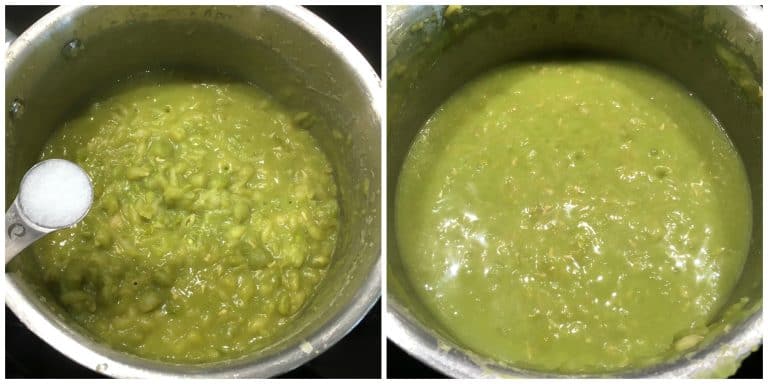

Also, there’s mushy peas. This is a British staple, usually a side dish but in the Midlands it is an acceptable dish to eat on its own. It’s Marrowfat peas soaked in baking soda, then boiled and mashed up until, well, mushy. Seasoned with salt and pepper and, if you’re in Nottinghamshire, mint sauce. Now, I like peas a lot. A childhood friend of mine had pea plants in her backyard and we would just go and devour them fresh from the stalk until her mum got mad that there were none left. Peas are great.
But there’s something about mushy peas that were just such a turn-off. I think it’s the babyfood-like texture, and the colour which fluctuates from artificial chartreuse to a Fallout 3 inspired grey-green. If someone else had gotten them and I could have tried a bite or two I would have, but they were so unappealing I didn’t try them for fear of wasting a few pounds and a cup of peas. I consider myself to be pretty open to trying new and different foods, but I hate the idea of being wasteful. Plus, neither of the two others I was with liked them, which isn’t really a selling point for them.
The Rides
Unlike the food, the traditional Britishness of the rides had me sold. I have a lot of dumb niche interests, and the turn-of-the-century funfair is one of them. I had a university professor who was passionate about Gilded era American passtimes, and she passed that along to me. This era coincides with the late-Victorian and Edwardian eras in England, and there is a lot of overlap. But before I go on a history tangent, I’ll talk a bit about the rides at Goose Fair.

The majority of the rides at Goose Fair are big, bright, and fast. Or for kids. For temporary rides, some of them are huge! Among other rides there were two big wheels, a huge Sky Screamer (tower with spinning swings pictured above in the post’s first image), and a roller coaster. Many of the rides were bumper cars (called Dodgems in England), or a variety of spinning rides such as Waltzers and Hoppers. Waltzers are a classic carnival ride, and that was the only ride that I went on and I LOVED IT. It was a little bit terrifying in the exact way that you want to be terrified on a ride; much faster than I thought, moving every which way, and screaming and laughing my head off. I’m not a huge ride-attraction kind of person, but I’m glad that I tried it and definitely had a blast.
Another thing about the rides here is that the designs have a flagrant disregard for copyright laws. In Canada, rides are pretty free of intellectual property, but apparently England is a lawless land where the rules do not apply.

No one licensed these characters to travelling carnival rides. I kind of love these weird mishmash designs that are trying to grab kids attention with characters that they know. Especially when they’re hand-painted, with sometimes hilarious results. I saw a tragically beautiful Snow White on the side of a ride that I still regret not taking a picture of, because she was definitely not the fairest in the land.
Some Ride History
Goose Fair has a ton of modern rides to choose from, but they’ve also got a selection of classics that really caught my eye. Check out the classic fairground attractions I saw!
Click the images to see them in full, without all that pesky text in the way.

“Professor Smith’s Original Museum of Curiosities”
Curiosity Museums (also known as Dime Museums) are one of the earliest attractions in touring sideshows. Sometimes hosting human performers (the classic “Freak Show”) and sometimes featuring the exotic and obscure, booths such as this one have been featured at funfairs since the early 1800s. They featured items from around the world, in a time when colonialism and an interest in “primitive cultures” were at their peak. This booth features shrunken heads from South America, a Museum of Curiosities classic.
Carousels are one of the earliest mechanized rides. The first steam-powered mechanical roundabout dates back to 1861, but even before this the rides existed, powered by manual operation of the owner or ponies. Though you can find more modern-looking carousels, there’s something so beautiful about the gaudy spectacle of these vintage-styled rides. On this one in particular, all the horses had unique names, which I thought was so charming. My favourite horse was named Bimbo. 
I’ve never seen a Cakewalk before, but these were some of the earlist amusement park rides, found in the classic Gilded age Coney Island parks like Luna Park. It originated in America in 1909, but quickly found its way to funfairs in England. It’s a really simple ride, simply walking along a small corridor which bumps up and down and side to side. Though a very mild ride by todays standards, the innovative mechanized motions made it quite a draw to thrill-seekers and spectators alike. 
I didn’t know that these swirly slides were called Helter Skelter, having only seen them in Roller Coaster Tycoon before seeing them at Goose Fair. The Helter Skelter rides originated in the UK, with the first documented appearance of the ride being at the Hull Fair in October of 1905. It’s a very simple ride with no mechanization – simply climb the stairs in the middle of the tower, then slide down the swirling slide on a small mat. There were several Helter Skelter rides at the fair and they were consistently busy with lots of children. This one was the only one there that had the classic “lighthouse” tower look to it. In researching the origin of the ride, I learned that it’s also called a Canadian Slide, but I have no idea why.
If you want to learn more about the history of funfair rides, I highly recommend checking out this website. My final verdict on Goose Fair is that it’s a really lovely way to spend a few evenings in early autumn. Fall fairs have always been a signifier of the changing season for me, and spending a chilly evening wandering through the fair and taking it all in was simultaneously very nostalgic and entirely new. If you’re in Nottingham or a nearby area next October, I really recommend heading down to the Forest to check out Goose Fair! If I’m in Nottingham this time next year, I’m definitely planning on it!
 travelbloom